On 4 November 1922, in the Valley of the Kings near Luxor, the discovery of Tutankhamun's tomb sent shockwaves through the world of Egyptology. It is regarded as the greatest discovery of the 20th century. Chance and the perseverance of one archaeologist could make 4 November 2015 the day of the greatest Egyptological discovery of the 21st century. It may be on this date that the tomb of the legendary Egyptian queen Nefertiti is finally revealed.
The reproduction of the tomb brings the original back to lifeIt was thanks to the construction of a reproduction of Tutankhamun’s tomb that Carl Nicholas Reeves, a renowned British archaeologist and Egyptologist, put forward his hypothesis. In 2014, 3D photographs of the original tomb were taken to create a replica for tourist visits. In these photos, Dr Reeves spotted faint vertical lines, invisible to the naked eye, on some of the tomb’s walls. These lines would actually conceal two doors leading to rooms that remain unexplored. One of them would reveal the tomb of Nefertiti, the famous wife of Pharaoh Akhenaten and a queen of legendary beauty. For nearly a century, paintings and religious decorations would have hidden the tomb’s secrets. |
The great return to the famous tomb
| To confirm his hypothesis, Nicholas Reeves needed to access the tomb. He convinced the Egyptian committee to let him enter equipped with a high-precision Japanese radar. While 3D models of Tutankhamun’s tomb already make it possible to imagine these two new rooms, the answer will come on Wednesday 4 November. Ninety-three years to the day after the tomb was first discovered. But doubt still hangs over the identity of the burial to be uncovered. The Egyptian Minister of Antiquities is thinking of Kiya, a secondary wife of Akhenaten, or perhaps Meritaten, the eldest daughter of the pharaoh and Nefertiti. For Nicholas, there is no hesitation: “Only one royal woman of the Eighteenth Dynasty is known to have received such honours, and that is Nefertiti.” |
 |
Revelations about a queen shrouded in mystery.
 |
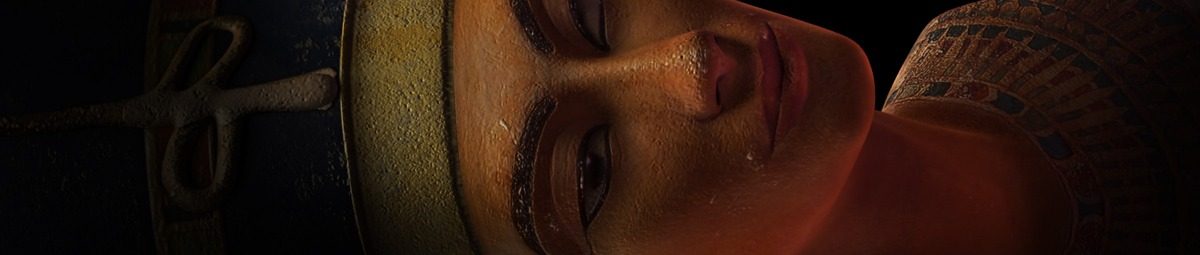
The legend of Nefertiti is a source of fascination for lovers of Ancient Egypt. Wife of Akhenaten, stepmother or perhaps mother of Tutankhamun, the mystery surrounding her death and burial remains complete. Florence Quentin, a writer and Egyptologist who has been passionate about the Egyptian queen since the age of 12, is eagerly awaiting the outcome of this adventure. “We will probably learn a great deal if we discover this untouched tomb,” she says. Once the mummy has been exhumed, DNA tests will reveal her identity as well as her relationship to Tutankhamun. After its discovery in 1922, it took archaeologists more than 10 years to empty and analyse the pharaoh’s tomb. If Dr Reeves’s predictions prove correct, the coming years in Egyptology promise to be rich and highly publicised. The last notable discovery in the Valley of the Kings was that of the tomb of Amenhotep, a high priest of Amun, in March 2015. But this exceptional return to Tutankhamun’s tomb is a major event, set to once again thrill Egyptology and its enthusiasts. For an Egypt somewhat neglected in recent years, it is also an opportunity to rekindle passions and invite new tourist visits. |
M2 Education, Training and Communication Scientific Communication track
Faculty of Educational Sciences. University of Strasbourg. Treasurer Association Cyclope