Healthcare professionals, patients, investors, shareholders: when it comes to biotechnology, audiences demand tailored information about the benefits of your product. Do you find it hard to communicate simply about the science behind your product?
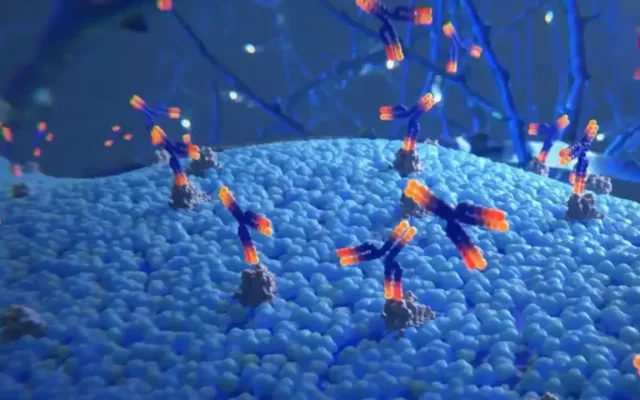
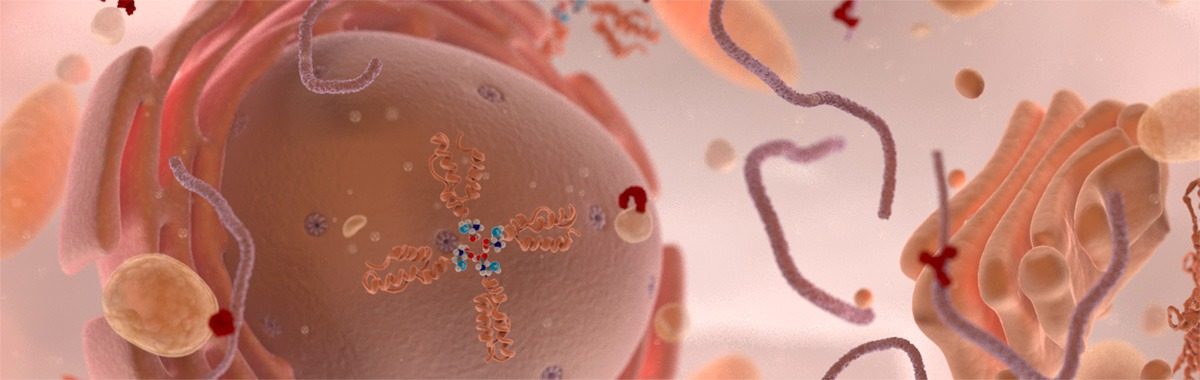
The mechanism of action of a pharmaceutical product is one of the most difficult concepts to communicate. Why? Because most mechanisms of action occur at the molecular level. They trigger complex signalling cascades and, in turn, affect cells, tissues and organs.
A huge challenge in biotechnology: understanding the mechanism of action
For the pharmaceutical and biotechnology industries, the stakes are high, because understanding the mechanism of action is essential to the decision-making process. It can affect the approval or use of a new drug or a new therapeutic option.
Explaining through images with visual storytelling
For these complex biotechnology topics, visual storytelling offers a solution. Visual storytelling is the art of making a complicated subject simple, thanks to eye-catching graphics and cutting-edge animation.
Visual storytelling to convince
In-depth studies have shown that graphics, mechanisms of action and film sequences have an enormous influence on how we perceive a given subject. For example, did you know that:
- visuals are processed 50,000 times faster than text,
- graphics quickly affect emotions,
- emotions have a major influence on the decision-making process?
That is the beauty of visual storytelling.
We have seen that good visual stories influence decision-makers. More broadly, those who use visual storytelling to present their mechanism of action gain a clear edge over the competition. The underlying trend is already underway… Will you be part of the adventure?