As a professional in illustration and medical and scientific video, I'm treating myself to a little journey across the decades:
For more than 35 years, I have witnessed and, above all, taken part in several technological shifts that have each deeply redefined the way I think and the way I practise my profession. Every decade has brought its share of changes, profoundly transforming how I live, work and interact.
The 1980s: The age of automation Computerisation revolutionised our working methods, offering automation and time savings. Digitisation made professional gestures flawless, making manual expertise less crucial to achieving an impeccable result.
The 1990s: The internet explosion opened the doors to universal information, making knowledge accessible to everyone. The need to memorise or to prepare in advance faded, as information became available at any moment in a few clicks.
The 2000s: The age of social media abolished distances, enabling instant connections across the globe. Physical interactions became less necessary to build professional or personal relationships.
The 2010s: The mobile revolution Mobile apps put a multitude of tools and gadgets within our reach, breaking down the barriers of our sphere of influence. The mobility of these tools made it possible to get almost anything, instantly and completely independently.
The 2020s: The age of artificial intelligence Artificial intelligence gives us the wings of omniscience, offering access to vast expertise without ever really having to learn anything. We can appropriate billions of hours of know-how in a matter of seconds, across every intellectual field. But AI has its limits. Read: Generative AI, or the limits of a simple idea.
Have I become stupid over time? Have I lost or gained know-how?
(You don't have to answer the first question, thanks ;-) As an illustrator and director of scientific videos, I feel I've had a full professional life, rather than one drained of substance or even of meaning, because in the end, I've spent it learning.
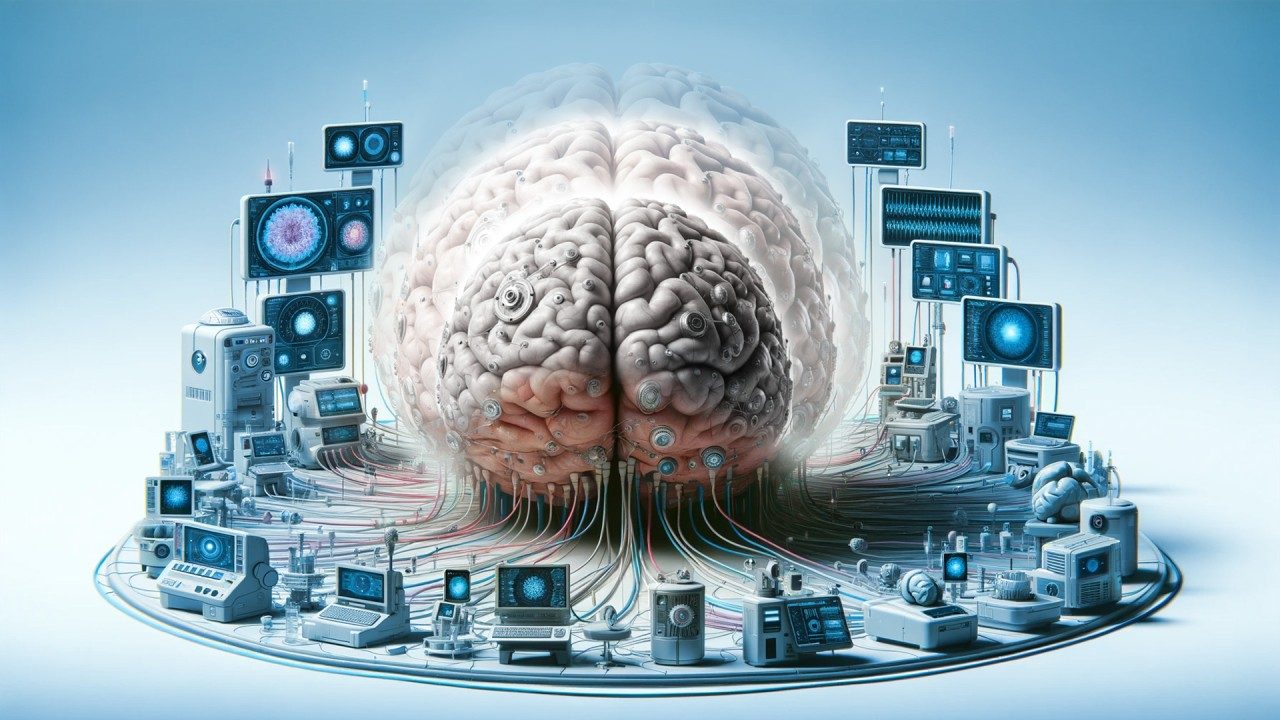
But more broadly, what does all this mean for the evolution of the human brain? The question isn't simple. Everyone knows that nature is thrifty with energy: an unused muscle wastes away, an unstressed bone becomes fragile. So what will become of our neurons if we stop stimulating them through learning, discovery and direct experience via an empirical approach and repetition?
As the head of an agency specialised in producing medical and scientific videos, I ask myself: how can we use these technologies to enrich, rather than diminish, our human experience? How can science communication help sustain engagement and curiosity in a world where information is everywhere but increasingly superficial? A world where we are encouraged to skim everything without ever truly making anything our own?
How can we balance these technological advances with preserving our human essence? Preserving our intelligence, quite simply. How can we use our expertise to ensure that technological evolution enriches, rather than diminishes, our human experience?
Christophe Martin - IMASCIENCE
MBHI (Made by Human Intelligence ;-)